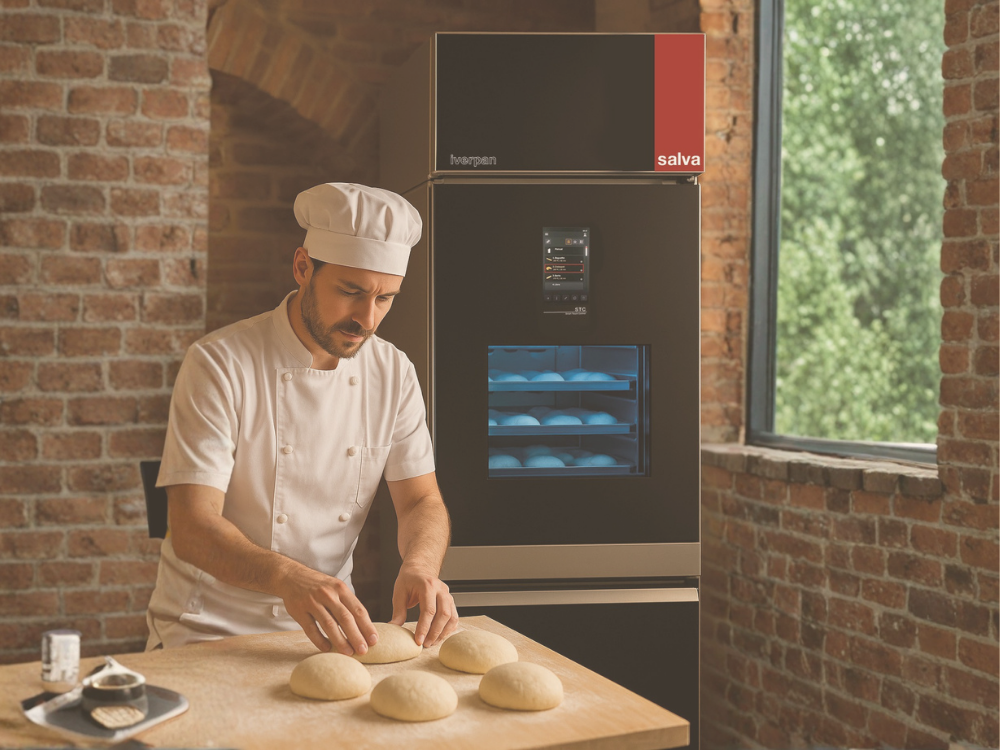
Controlled fermentation: how to choose the perfect proofing chamber
Controlled fermentation is one of the most powerful levers to improve bread consistency, optimize production shifts, and deliver reliable quality every day. For modern artisan bakeries, production bakeries, and HoReCa businesses, having the right proofing equipment (especially rack proofers and tray proofers) makes the difference between relying on “instinct” and running a stable, measurable, repeatable process.
In this guide, we explain what controlled fermentation is, the types of proofers available (racks vs trays), which technical features truly matter, and how to choose the unit that best fits your production.
What is controlled fermentation in baking?
Controlled fermentation is the process of fermenting dough with stable, programmable settings for:
-
Temperature
-
Humidity
-
Time
-
(in some units) automatic stages for retarding/proofing/final conditioning
The goal is simple: achieve more consistent bread with better volume, structure, and flavor—while reducing batch-to-batch variability and making daily planning easier.
Why investing in proofing equipment improves profitability
When your proofer is stable and correctly sized, you get very tangible improvements:
-
Consistency: same conditions = the same dough response.
-
Shift planning: more predictable production, fewer last-minute emergencies.
-
Less waste: fewer pieces that end up out of spec.
-
Consistent quality: crucial for HoReCa and standardized chains.
-
Space and workflow optimization: especially with rack proofers.
Rack proofers vs tray proofers: key differences
Rack proofers
A rack proofer is designed to work with full bakery racks loaded with trays (e.g., 60×40 or other formats). It’s the ideal option when you need to move high volumes in an organized, fast way.
Operational advantages:
-
Higher capacity per cycle.
-
Less handling: roll the rack in and it’s ready.
-
More efficient workflow (production, resting, loading/unloading).
-
Widely used in production bakeries, higher-volume artisan bakeries, and HoReCa.
Ideal for:
-
Medium/high output
-
Intensive shifts
-
Broad product range (multiple SKUs per day)
Tray proofers
A tray proofer (or proofing cabinet for trays) is typically geared toward more compact production, with direct access via trays or internal rails. It’s very practical for bakeries with continuous production and fine control over small/medium batches.
Advantages:
-
Flexibility for small batches.
-
Quick access to specific trays.
-
Very useful for artisan bakeries and in-store bakeries with an on-site bakehouse.
Ideal for:
-
Low/medium output
-
Varied production in small batches
-
Smaller spaces
Technical features to look for in a professional proofer
1) Digital temperature and humidity control
The foundation of controlled fermentation is keeping values stable. Look for:
-
Precise digital control
-
Stability and fast recovery after door openings
-
Humidity adjustment to prevent a dry “skin” on the dough or excessive condensation
2) Multi-stage programming (programmed proofing)
Highly relevant for daily production:
-
Programs by product
-
Recipe/flour-based adjustments
-
Repeatability for the entire team
3) Uniform air circulation
Homogeneous fermentation requires:
-
Even distribution of humidity and temperature
-
Avoiding hot/cold spots
-
Consistent results between upper/lower trays
4) Real capacity and ergonomics
-
How many racks or how many trays per cycle?
-
Which format (60×40, etc.)?
-
How much time do you save on loading/unloading?
5) Build quality, insulation, and easy cleaning
For professional use:
-
Efficient insulation (more stable energy use)
-
Durable materials (intensive use)
-
Easy cleaning (daily production)
How to choose a rack or tray proofer based on your production
If your priority is capacity and speed
A rack proofer is often the best solution:
-
Minimizes handling
-
Speeds up bakehouse operations
-
Makes standardization easier (very useful in HoReCa)
If your priority is flexibility for batches
A tray proofer is a better fit:
-
You can fine-tune smaller loads
-
Switching products is easier
-
More “granular” control per tray
If you deal with production peaks (weekends / service times)
Look for:
-
Multi-stage programming
-
Fast temperature/humidity recovery
-
Capacity to absorb peaks without sacrificing quality
Typical uses of controlled fermentation in bakeries and HoReCa
-
Stable final proof for daily breads
-
Production with defined schedules (mise en place)
-
Standardization across multiple points of sale
-
Fermentation adjustment for enriched doughs or high-hydration doughs
-
Better control during seasonal changes (winter/summer)
Direct benefits in the final product
When fermentation is consistent, you typically see:
-
Better volume and more regular scoring/oven spring
-
A more uniform, well-developed crumb
-
A crust that performs better after baking
-
More balanced, repeatable flavor